Monday, 30 October 2017

Loot Crate - October 2017


Welcome!  Today I am going to be looking at the Loot Crate.  For those who don't know.  Loot Crate is a monthly subcription where you can get some neat collectables and cloths.  This months theme is Mythical.  Let's see what October's SPOOOKY crate has to offer.

Ghostbusters Tee
When the 80's haunt your everyday life
Who you gonna call?
When the synth pop
cut your ears like a knife
Who you gonna call? 

This is an awesome shirt. I love how it combines the early nineties pastels and Ghostbusters tp make something quite entertaining.


Strangers Things Vinyl Figure

A great vinyl set.  We have Eleven and the Demogorgon facing off line from the end of the the first season.  It's perfect for decorating your desk or just having on display.  Waffle not included (Don't tell Eleven).


Thor vs. Loki Vinyl Figure

This is my favourite find in this month's crate.  I'm a fan of the Thor comics (namely Loki) and this little addition is now on my book shelf in the office.


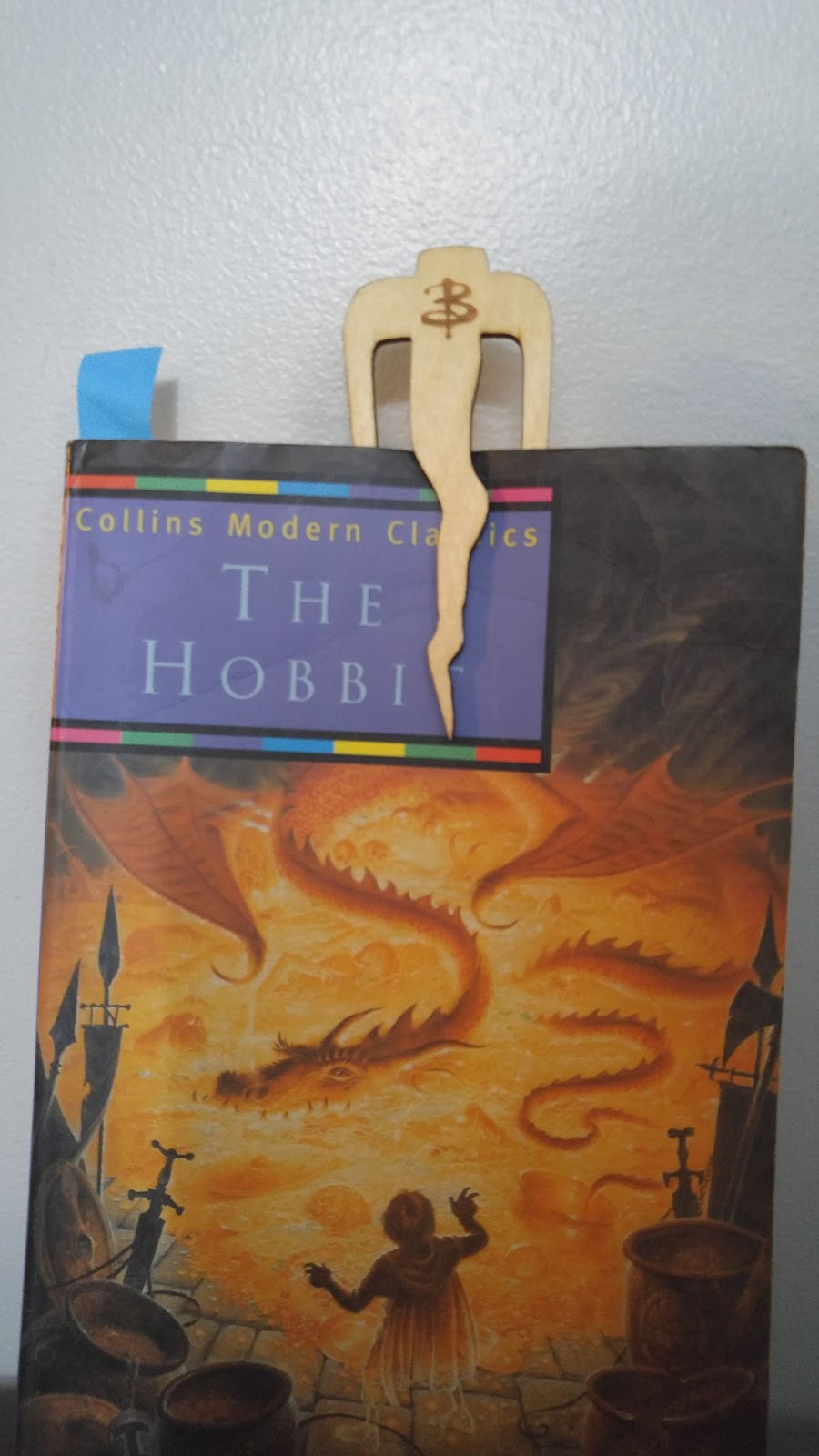
Buffy the Vampire Slayer Wooden Bookmark
A neat, little, wooden bookmark.  I never really was a fan of the show.  In fact, I'm pretty sure I was too young to be its target audience. It's a bookmark.  It marks books.


Goblin Pin

It's a pin.  I like the look of the goblin and I have it pinned on my house coat.  'Bout it.


Final Thoughts?
Overall I'm happy with what was in the crate.  The Thor and Loki set is definitely my favourite.  I would for sure do this again.  I would give this 8 1/2 stars out of 10.


Monday, 23 October 2017

Into the Fairylands: Chapter 10

Into the Fairylands
By J. R. Bennett
<Chapter IX~*~Chapter XI>
Chapter X
The March on Spyrus
~*~
High in the skies, Little Dill looked out for the rock Spyrus on the back of Captain Jolly Roger.  From a pair of oversize binoculars, the little toy searched with no sign of the rock in sight.  Behind the pair were an army of one hundred eagles, each armed in the event of an attack.
            “Any sign of the rock?” asked Jolly Roger.
            “Nots yet!” Little Dill called back.
            The flock steered to the left.  Nothing.  To the right.  Still nothing.  All they could still see was purple mist flowing everywhere.
            Jolly Roger dived down, the eagles following suit.  Soon their bellies were an inch from the ice as they glided over the surface.  Just as fast as they were below, they rose back up again and veered west.  The sudden turn took caused Little Dill’s hat to be flung from his head and fall in to the violet abyss.
            “We’re losing light, sir,” called one from the eagles from behind.
            Little Dill wasn’t listening though; he was too absorbed in looking for the Spyrus.
            “He’s quite right!” Jolly Roger called back.  “We’ll have no way of getting back if we don’t leave now while the sun is still out.”
            Little Dill heard the seagull this time and reluctantly agreed to travel back to the Pedigree.  The flock was about to turn around when from their right came a crowd of flying, deformed, snake-like creatures.  Jolly Roger dived down to avoid them while the eagles charged head on into the oncoming mass.
            Jolly Roger surged left and right as eagles and monsters fell from the sky, landing on the hard ice below.  Both toy and bird knew that there was little chance of going back as long as the conflict above them was in the process, but sitting and waiting would not be a wise choice either.  The best option Jolly Roger could come up with was for Little Dill and him to keep moving as much as possible and avoid being noticed by the Manookoo.
            Left and right.  Up and down.  Over and under.
            Little Dill gripped tightly to the seagull with all his might, hoping not to be knocked off.  There was little hope that that they would make it out alive now.
            Jolly Roger was losing strength; he needed a chance to rest before they could even try to make it back to the ship.  In the distance looked like a blackish mass that was large and round.  The pair didn’t notice that it was from the mass that the Manookoo were streaming from, nor would they have cared if they had.
            Jolly Roger just made it to the shore (if that is even the right word for it).  From there Little Dill and Jolly Roger both could see the fighting.  The eagles had a slight advantage but the Manookoo creatures were over starting to gain the upper hand.
            Little Dill and Jolly Roger made their way up the rocky shore toward the start of what appeared to be a smooth slope made of solid stone.  Little Dill looked at Jolly Roger.  Jolly Roger looked back at Little Dill.
            “By Jove!” the gull cried.  “I think this has to be that Spyrus rock the old wizard was croaking about.”
            “It is! It is!” the little toy cried back, jumping with glee.
            “We have to get back to the ship.” Jolly Roger realized.  “We need to tell Ed an’ them our find.”
            “But hows?  Those snakey t’ings ares all overs the places.”
            “Right,” said the bird.  “I guess we’ll just have to charge through and hope for the best.  Get back on my back.  Hang on tight.  I wasn’t named captain for nothing.”
            With a run, a jump, and the flap of a wing, Jolly Roger was soon gliding close to the ice field.  Whenever there seemed to be an enemy or an ally falling from the battle in the sky, the seagull would veer to avoid collision.  Little Dill tried to signal as many of the eagles as he could of the sudden retreat, trying his hardest not to lose his grip on his flying friend.  Behind them, some of the eagles stayed behind to hold of the snake-creatures while those who were growing tired could retreat with Little Dill and Jolly Roger.

Ed and Travis were on the poop deck with Captain Mulligan looking over a map of the Periculosus Sea, marking where the cloud was moving currently and estimating the time before it would reach the island.
            “They’ve got a day, at most.” Mulligan said solemnly.  “It’ll reach the coast by morning and then make its way across.  Any ground forces there are going to need to be ready.”  The captain then scribbled on a sheet of paper and handed it to one of the crewmembers.
            “What I’m interested in knowing,” added Ed, “is where on earth Spyrus is.”
            “Unless your little friend and tha’ bird get back ‘ere in one piece,” Mulligan answered, “we’re up t’e creek wit’ou’ a pa’le.”
             There came a moment of silence.  Suddenly, from the distance came a faint call.  The three looked to see Little Dill and Jolly Roger flying back to the ship.  With a crash into the table, toy and bird made it back in one piece with the remaining eagles following suit.  Many were tired and somewhat battered from the conflict.  Mulligan ordered for the infirmary to be opened up for the eagles while an emergency meeting was held on the poop deck.
            Little Dill told everyone what he and Jolly Roger saw on their expedition.
            “Our bow is pointed west so that means our rock is headin’ from the stern eastward to the Forestlands.” Mulligan observed from the map.  “We’re gonna need to act fast.”
            “That’s gonna be easier said than done.”  Zach observed pointing at the direction Mulligan had been referring too.  “If we’re going that way, there’s a good chance those snake creatures are going to attack.  We know they’re defending Spyrus since they went after Little Dill and Roger.  I’m not saying we can’t do it, I’m saying we’re going to need cover when we go.”
            “We still have the brownies.” Ed answered.
            “But how long will they hold?”
            “I don’t know?”
            “Then forget them.  We’re going to need something to keep those things at bay.”
            “Then what do you suggest?” Ed asked hotly.  “Seems like you want to criticize but not give a solution.”
            “Easy.” Alice interrupted.  “We can still use the Brownies, but we’ll just need something to back ‘em up.”
            “I will provide some more of my guard to support your venture.” Stormwing called.
            “Well, that’s settled.” said Bug-a-boo as he pulled from his pipe.  “Now, I suppose I ought to list out what we know.  First, the Zeltic demi-god Manoo is locked up with his cult in a floating rock; second, said rock is shrouded in a thick purple fog that is bent on destroying the Deltic Empire; third, the only known weakness of Manoo is to break the seal that is keeping this said rock in existence.”
            “Well,” answered Travis, “we at least know what we need to do.”
            “I hope you all know,” Bug-a-boo went on solemnly, “this is going to be very dangerous.  Manoo will be relentless.  As a titan, he has the power to and will do whatever he can to squash his enemies.”
            “Yes,” Ed answered.
            “Good.  It helps to know what you’re getting into before doing something stupid.”

The next morning, everyone was ready for battle.  One of the Pedigree’s life boats were modified to act as a sled to get Bug-a-boo, Ed, Travis, Zach and Alice across the frozen ocean to Spyrus with harnesses made of rope that would be worn by some of Stormwing’s eagles.
            It was midday once everyone was ready.  Through the purple haze, was a vague abyss that showed nothing of their destination.  The sled was pointed roughly in the direction Little Dill and the search party had traveled from the day before.  After a few goodbyes and well wishes, the eagle-driven sled containing a few brownies, four adolescents and a wizard set out.  A head of the group was a small group of eagles – who would act as protection should they run into trouble – and Little Dill and Jolly Roger acting as guides (though it was advised for the pair to flee to the sled should they run into any of those flying snake-creatures again).  Captain Mulligan insisted they wait until morning to set out but Ed disagreed.  To Ed, they needed to head out as soon as possible before they lost track of the floating rock.
            As the sled bolded into the purple haze, Alice looked back on the Pedigree, and watched as the old, ironclad ship became smaller, and encased in the mist.  Soon the ship was lost from sight and the sled was surrounded in the purple fog.  It was hard to see Little Dill through the haze; everyone could only make out part of Jolly Roger for a few moments but just as fast, he was lost in the mist.
            The journey was an uncomfortable one.  The frozen salt water had been captured in mid-wave at some points, causing the boat to jump every so often as it sped along.  Despite the sky being hard to see, a heavy rain fell hard on the small band.  The only protection they could find was an old canvas tarp that was left in the boat.
            Eventually Jolly Roger and Little Dill flew back down to the sled; the two were soaked from the rain but didn’t seem much bothered by the ordeal.
            “We’re almosts there!” Little Dill cried.
            “Some of the eagles saw some of those Manoo creatures a head.” Jolly Roger explained.  “They’re going to stage a distraction for us so we can get on through.  We should be at Spyrus shortly.”
            At that moment, there came the squeal of a beast in great pain and the sound of metal clanging.
            “There they go,” said Ed.
            “No time for that,” interrupted Bug-a-boo.  “Look!”
            There before them was the rock Spyrus, moving at a slow pace.  Even in the purple fog, everyone could see it.

Tuesday, 3 October 2017

The Last DJ: A Tom Petty Tribute

To-day, I heard about the passing of musician and actor Tom Petty.  Many of us can remember the number of great hits by him whether it be from his long running band Tom Petty and the Heartbreakers ("Refugee", "Into the Great Wide Open", "Don't Come Around Here No More"), hi solo career ("Won't Back Down", "Yer So Bad", "You Don't Know How it Feels"), or his  role in the 80s supergroup The Travelling Wilburys ("Handel with Care", "End of the Line", Tweeter and the Monkey Man").

With a career lasting 40 years, Petty was able to adapt to the trends in the music industry.  From the rock and roll twang of the 70s, the synthetic pop of the 80s, to the grungy heavy beats of modern rock.  We have truly lost a legend of rock and roll.

His music has had an influence on artists and fans alike.  Songs like "I won't back down" are heard everywhere and are still hits.  I always have a few of his songs on my playlists for writing.  So, all I can really say is thank you Tom Petty.  You stuck around long enough to bless the world with your music, it's sad you couldn't stay longer.


Friday, 8 September 2017

On the Road to Rainhill with Loco Motives: A Study of the Innovation in Rail Travel during the Early Nineteenth Century

Artist's portrayal of a bustling Victorian Station
            “[T]he engine, having received its supply of water, the carriage placed behind it… and was set off at its utmost speed, thirty-five miles an hour, swifter than a bird flies… You cannot conceive what that sensation of cutting the air was; the motion is as smooth as possible, too.”[1]  This quote from Fanny Kemble describes the experience of travelling by steam locomotive during the early days of rail travel.  The Industrial Revolution owes much of its development to the steam locomotive.  These steam driven machines changed the world by allowing for people and goods to reach destinations faster than in the past and would dominate transportation for almost a century.  The innovators of this change in transport were Richard Trevithick and the father-son duo George and Robert Stephenson, their efforts in the development of the steam engine culminated at the Rainhill Trials.  Their work affected the Industrial Revolution by developing the steam engine from being a tool for mining and factory work into a revolutionary mode of transport.

Richard Trevithick
            Trevithick’s invention of the stream locomotive was merely an improvement on an improvement to the steam engine.  In 1777, the Newcomen atmospheric steam engine purpose was to pump water out of mines to allow for further collection of coal, iron and other important minerals by British mining industry.[2]    These steam engines were heavily inefficient, consuming copious amounts of coal and a thermal efficiency of around one percent.[3]  In 1763, Scottish engineer James Watt was able to make the steam engine more efficient by introducing a water-cooled condenser that was connected to the cylinder via a long pipe and then closed off the top of the cylinder to prevent heat loss, allowing less coal to be needed in powering the engine.[4]  Though this made the engine more practical, it still used low pressure, making it difficult any other use other than factory work.[5]

            Trevithick believed that higher pressure would allow for a more effective engine.[6]  To make this belief a reality, he used a boiler and piston design and had the fire and flue placed within the boiler to maximize amount of water that would be heated to power the engine.[7]  The success of this innovation led Trevithick to see if his improved steam engine could actually propel itself and set to work, with assistance from friends in Camborne, make this image come true.  By 1801, the Puffing Devil made its first run along the streets of Camborne, only stopping when it ran out of steam.[8]  The voyage of Puffing Devil proved to Trevithick’s theory that a steam engine with a boiler-piston design could act as a self-moving machine for transport.

Artist's portrayal of Trevithick's locomotive traveling
along the Pen-y-Darren Tramway
            On February 1804, Samuel Homfray, owner of the Pen-y-Darren Ironworks in South Wales, challenged Trevithick to a wager of five-hundred guineas that a steam propelled “travelling engine” could not carry eleven tons across the ten mile tramway from Pen-y-Darren  to the Glamorganshire Canal in Abercynon.[9]  Trevithick accepted this bet, and on 21 February 1804, his locomotive, a crudely built machine with a single vertical piston and long piston rod to power an eight-foot flywheel, set out along the cast iron rails of Pen-y-Darren’s tramway with ten tons of pig iron and seventy men.[10]  Trevithick’s engine accomplished the voyage in four hours, travelling five miles an hour, but its weight broke the brittle iron rails by the end of its journey.[11]  While the Pen-y-Darren returned to using horses for the next thirty years, Trevithick proved the capability of his steam driven machines as a form of transport.

George Stephenson
            Trevithick’s success in building his steam engine to pull goods and passengers at Pen-y-Darren sparked a boom in developing rail transport, including a civil and mechanical engineer from Northumberland named George Stephenson.  Stephenson first interaction with a steam locomotive’s inner workings started while working on the Blücher at a colliery in Killingworth.  It was while working on Blücher that Stephenson introduced a series of long lasting innovations such as condensing the number of controls for the cut-off to a throttle, and allowing the engine to move in reverse.  Stephenson’s innovations interested Edward Pease, who made Stephenson chief engineer on the Stockton and Darlington Railway in 1823.[12]  The twenty-six mile rail line connected the port town of Stockton-on-Tees with the industrial town of Darlington; it had been the hope of Pease to make this line a “great public way,”[13] where both passengers and goods could travel between the two communities.

Print of George Stephenson's
Locomotion
            On 25 September 1825, the Stockton and Darlington Railway was opened to the public with Stephenson’s Locomotion pulling the first train containing six hundred passengers and freight as a top speed of twelve mile per hour.[14] Unlike Trevithick’s Pen-y-Darren locomotive that had one piston and a flywheel, Stephenson designed Locomotion with two pistons mounted vertically in the boiler while crossheads and connecting rods branched off to drive the wheels.[15]  Though Locomotion proved successful in its inaugural voyage, the Stockton and Darlington was not ready for complete mechanisation of its railway; passengers would continue to be carried by horse-drawn wagons while the locomotives would be restricted to hauling coal.[16]
Robert Stephenson, circa 1850
            George Stephenson’s success at Stockton and Darlington led him to the Manchester and Liverpool Railway.  The thirty mile line had been built to connect the city of Liverpool with the industrial centre of Manchester so that merchants would be able to import and export goods with markets in the United States.[17]  The main issue that arose in the planning stages of the railway was whether to use locomotives or cable inclines.  Stephenson was not against cableways, having used such traction on his colliery, but he believed that locomotives would be a better choice for the new line.[18]  While a compromise was agreed upon over the gradients of the line, the debate over whether cable or locomotive would be used to work the line was still in heated battle.  It was agreed among the directors of the Manchester and Liverpool Railway that the answer to the problem would be found through an experimental rally.[19]  A prize of five hundred pounds offered to “a Locomotive Engine which shall be a decided improvement on those now in use.”[20]  Those interested in participating had only five months to design, test and build their locomotives to meet the strict standards set for the trials.[21]  The engines would pull three times their own weight while not polluting the surrounding area, meaning that coke would have to be burned instead of coal.[22]  On October 6, 1829, five contestants in what would be remembered as the Rainhill Trials greeted the directors.[23] 

Robert Stephenson's Rocket
            Among the contestants was George Stephenson’s son Robert, who had taken over overseeing the development of the Stephenson firm’s entry, Rocket.  Robert Stephenson’s entry was designed to improve upon the father’s Locomotion while using well-established innovations to allow the locomotive to meet the standards set at the trials.  The two pistons on Rocket were set at a thirty-five degree angle on the sides of the back end of the boiler with connecting rods to power the front driving wheels.[24]  Robert introduced two major innovations with his engine: the multitubular boiler (an invention by Marc Séguin) and a blastpipe, to draw air through the boiler tubes and assist in the consumption of fuel.[25]  The improved boiler and the new blastpipe allowed for Rocket to consume less fuel and be consistent in its performance when it appeared at Rainhill.

Diagram of Cyclopede

            Rocket was the only engine to perform consistently without issue during the trials, among the contending locomotives was a “horse worked contraption” call Cycloped.[26]  It proved to be an early failure when one of the horses on Cycloped’s treadmill fell through the floor of the engine and broke its hoof.[27]  Timothy Burstall’s Perseverance became damaged when it was delivered to Rainhill and, though allowed time for repairs, only reached ten miles per hour when it made its appearance.[28]
Novelty (left) and Sans Pareil (right)
  The Sans Pareil by Timothy Hackworth was disqualified when it was discovered that the engine was six hundred pounds over the 6.6 ton weight limit, though it was believed that the engine could have had some potential.[29]  The only contestant that could have possibly challenged Rocket would have been John Ericsson and John Braithwaite’s Novelty.  With an unconventional design and reports of reaching speeds of twenty and forty miles per hour, Novelty quickly became the favourite among those attending the Rainhill Trails.[30]  Though it may have been able to reach such speeds, it suffered malfunctions in all three of its trial runs.[31]  Due to the failure of the other contestants to complete the trials and its innovative design, on October 14, 1829, Robert Stephenson and his Rocket won the Rainhill Trials.[32]

            In conclusion, the success of Richard Trevithick, and George and his son Robert Stephenson meant that the steam locomotive had a leading place in the Industrial Revolution.  The success at Pen-y-Darren prompted Trevithick to improve on his invention and displayed it in London in 1808 along a circular track under the name Catch Me Who Can, it was not as successful due to a broken rail and a lack of interest by the public after a while, forcing Trevithick to close his venue a few weeks later.[33]  Trevithick had successfully taken Watt’s improved steam engine and made it into a smaller and useful travelling machine, setting the stage for the rise of steam traction in transportation.  George Stephenson’s Locomotion continued regular service until 1841.[34]  During its thirty-year career, Locomotion’s boiler exploded in 1828 and had to be refitted before briefly serving as a pumping station during the 1840s.[35]  Since 1975, it has sat in the Darlington Railway Museum as a testament of George Stephenson’s effort in improving the steam locomotive and proving its strength and durability in pulling passengers and goods.  Robert Stephenson’s victory at Rainhill meant that he would have a contract with the Liverpool and Manchester Railway to produce more engines.[36]  He would go on to improve upon his Rocket design and produce more advanced locomotives such as his Planet class engines, the first steam locomotive class created.[37] Despite the original steam powered engine having a different objective, Trevithick made it possible for it to become a form of transportation.  George and Robert Stephenson introduced new ways for the steam locomotive to become more practical in British society and demonstrated how these machines would change British society for the better.  Therefore, the developments by Trevithick and the Stephenson’s allowed for the locomotive to become a part of the Industrial Revolution.
J. M. W. Turner's Rain Steam and Speed - The Great Western Railway


Bibliography
Dettmer, Roger. “Prime Mover.” Engineering & Technology (17509637) 8, no. 11 (December 2013): 60-63. Academic Search Complete, EBSCOhost (accessed February 24, 2015).

Gardner, Laura. “Archive.” Professional Engineering 20, no. 7 (April 4, 2007): 80. Academic Search Complete, EBSCOhost (accessed February 19, 2015).

Garratt, Colin, ed. The World Encyclopaedia of Locomotives. London: Acropolis Books, 1997.

Kemble, Fanny. “A Trip on Stephenson’s Rocket, August 1830.” In Writing the Rails: Train Adventures by the World’s Best-Loved Writers, edited by Edward C. Goodman. New York: Black Dog and Leventhan Publishers, 2001.

Morgan, Bryan. Early Trains. London: Camden House Publishers, 1986.

Nock, O. S. The Pocket Encyclopaedia of British Steam Locomotives in Colour. Poole: Blandford Press Ltd., 1964.

Ross, David, ed. The Encyclopaedia of Trains. London: Amber Books Ltd., 2003.

Spielvogel, Jackson J. Western Civilization Vol C: Since 1789. Boston: Cengage, 2012.


Notes:
[1] Fanny Kemble, “A Trip on Stephenson’s Rocket, August 1830”, in Writing the Rails: Train Adventures by the World’s Best-Loved Writers, edited by Edward C. Goodman, (New York: Black Dog and Leventhal Publishers, 2001) 11.
[2]Roger Dettmer, “Prime Mover”, Engineering & Technology (17509637) 8, no. 11 (December 2013), Academic Search Complete, EBSCOhost, accessed February 24, 2015, 61; Jackson J. Spielvogel, Western Civilization Vol C: Since 1789, (Boston: Cengage, 2012), 599.
[3] Dettmer, 61.
[4] Dettmer, 61-62.
[5] Ibid., 62.
[6] Ibid.
[7] Ibid.
[8] Ibid., 63.
[9] David Ross, ed., The Encyclopaedia of Trains, (London: Amber Books Ltd., 2003), 10; Colin Garratt, ed., The World Encyclopaedia of Locomotives, (London: Acropolis Books, 1997), 9.
[10] Bryan Morgan, Early Trains, (London: Camden House Publishers, 1986), 7; Ross, 10; Spielvogel, 600.
[11] Ibid.
[12] Morgan, 12; Garratt, 9.
[13] Morgan, 13. Garratt, 9.
[14] Morgan, 13. Garratt, 9.
[15] O. S. Nock, The Pocket Encyclopaedia of British Steam Locomotives in Colour, (Poole: Blandford Press Ltd., 1964), 113; Ross, 12.
[16] Ibid.
[17] Morgan, 16.
[18] Ibid., 16-17.
[19]Morgan, 17; Laura Gardner, “Archive”, Professional Engineering 20, no. 7 (April 4, 2007), Academic Search Complete, EBSCOhost (accessed February 19, 2015), 80.
[20] Gardner, 80.
[21] Ibid.
[22]Morgan, 17.
[23] Ibid., Gardner, 80.
[24] Nock, 113; Ross, 13.
[25] Ibid.
[26] Morgan, 17, Gardner, 80.
[27] Gardner, 80.
[28] Ibid.
[29] Ibid.; Morgan, 17; Ross, 13.
[30] Morgan, 18, Gardner, 80.
[31] Gardner, 80.
[32] Ibid.
[33] Garratt, 9; Morgan, 7.
[34] Ross, 12.
[35] Ibid.
[36] Gardner, 80.
[37] Ross, 13.

Wednesday, 23 August 2017

Fifteen Guinea Special: A Review of Enterprising Engines by the Rev. W. Awdry


Stanier 5MT pulling the
  Fifteen Guinea Special.
            On 11 August 1968, a Stanier 5MT departed from Liverpool Lime Street Station for Manchester Victoria.  Once at Manchester, a Britannia Class, Oliver Cromwell, took over the train and departed for Carsile.  The return train from Carsile was pulled by two LMS Stanier Class 5s until reaching Manchester Victoria where the 5MT took over the train again and returned to Liverpool.  There were many who came out to greet these old iron horses as they roared down the line.  The event was significant for it was on that day in 1968 that British Railways would use steam traction.
 
Rev. W. Awdry
            The sad end to British steam created a movement to protect as many steam locomotives as possible since British Railways began to phase out steam in the mid-1950s.  Small enterprises like the Talyllyn Railway in Wales and the Bluebell Railway in England had proven to be successful in bringing awareness to the preservation of steam but only so much can be done by these groups due to the costs of purchasing and maintaining such engines.  Among this group of preservationists was a retired clergyman who had become famous for a series of books about a railway made up of anthropomorphic locomotives and chronicled this changing age in a book entitled Enterprising Engines.  His name was the Reverend Wilbert Vere Awdry.


           Enterprising Engines is comprised of four stories: “Tenders for Henry”, “Super Rescue”, “Escape”, and “Little Western”.  The book opens with Gordon the express engine expressing his feelings about the current state of the world.[i]  James, Duck and Henry ignore Gordon’s glum mood pass it off as just too much coal, bad water, or boiler ache.[ii]  Only the Fat Controller (Sir Charles Hatt for those up on the cannon) shows some sort of empathy:

   Gordon backed down on his train, hissing mournfully.
   “Cheer up Gordon!” said the Fat Controller.
   “I can’t sir, Sir.  …I keep thinking about the Dreadful State of the World, Sir.  Is it true, Sir, what the diesels say?”
   “What do they say?”
   “They boast that they’ve abolished Seam, Sir.”
   “What, Sir!  All my Doncaster brothers, drawn the same time as me?”
         “All gone, except one.”[iii]

Gordon meets his brother the Flying Scotsman
Feeling sorry for Gordon, the Fat Controller sends word to some associates to have the Flying Scotsman come to visit the railway.  Everyone is excited to meet their new visitor, except Henry, who is jealous of Scotsman’s use of two tenders.  “I never boast, …but I work hard enough for two.  I deserve another tender for that.”  Duck quickly comes up with a response by promising Henry six tenders, only for the big tender engine to discover that he has been tricked into pulling a line of six dirty old tenders set for scrap.[iv]

            Henry’s luck changes for better in the second story “Super Rescue”.  Two diesels arrive to assist the railway; they have no names, just numbers, 199 and 7101. 7101 is friendly enough, but 199 has a very low view of the railway and the engines and makes these views known:
199 (left) and 7101 (right) sparking the wrath of Duck.

...“It’s time 7101,” said [199], “That we take this railway over.”
   “Shsh 199!  It’s their railway after all.”
   “Not for long,” persisted 199.  “Our Controller says Steam engines spoil our image.”
   “Of course we do.”  snapped Duck.  “We show what frauds you are.  …If anything happens, you care nothing for your train.  You moan for your fitter.  We bring it home, if only on one cylinder.”
   “Nothing,” boasted 199, “ever happens to us.  We are reliable.”[v]

199’s comments are met with the scorn of the steam engines.  Later that day, Henry is returning home feeling more humiliated after having “lost” his regulator.  During his journey home, he happens upon 199, who has completely failed and is “wail[ing] for his Fitter.”[vi]  At the same time, 7101 passes with the express with troubles of his own due to a failed Ejector, forcing the diesel to growl to a hault and also needing Henry’s help.

Douglas and crew preparing to rescue Oliver, Isabel and Toad
            The next story, “Escape”, opens with Douglas taking the Midnight Goods to a station on the Other Railway (British Railways).  Upon preparing to leave with another train, he happens upon a tank engine named Oliver, who is escaping with his coach Isabel and a break van named Toad from being scrapped.  Oliver has run out of coal and is desperate to escape to the Island of Sodor for safety.  Inspired by the little engine’s courage, Douglas agrees to help.  After a few adjustments to make Oliver and his train look like they are going to the scrap yards and nearly being caught by a foreman, Oliver shares his experience when fleeing from British Railways.

"We stayed there for days, with diesels
baying and growling like hounds."
…“We ran at night.  Friendly signalmen would pass us from box to box when no trains were about.  We got on well till ‘Control’ heard about a ‘mystery train’.  Then they tried to hunt us down.  […] A signalman let us hide on an old quarry branch.  Driver, Fireman, and Guard blocked the opening with rubbish, and levered one of the approaching rails away.  We stayed there for days, with diesels baying and growling like hounds.”[vii]

The return to Sodor is marked with the Flying Scotsman’s departure back to Britain.  The engines a;; say their goodbyes and the Fat Controller says a few words of encouragement. “…what ever happens elsewhere, steam will be at work here.  We shall be glad to welcome all who want to see, and travel, behind real engines.”[viii]  Enterprising Engines closes with the Fat Controller welcoming Oliver to the railway and 7101 (renamed Bear for his growling) getting a second chance (at Henry’s insistence).

            What works for Enterprising Engines is the way Awdry lays out the book.  The Each story plays into the next through the characters, events, or continuing where the previous story leaves off.  This approach makes the book feel big, more like a novel than a small children’s anthology.  Previous Railway Series books will follow a series of stories that are only connected with a common theme or characters.  Enterprising Engines is dealing with a much more serious topic and theme of the changes happening in this paracosm of childhood innocence.  This topic echoes through out Enterprising Engines Whether it be Gordon’s morning the possibility of being the last of his kind, the engines fighting with 199, or Oliver’s exodus from the Other Railway, we get the sense of the world is not quite as simple as it once was for the engines on the Island of Sodor.
 
            Another success in the book is how it becomes darker as the book progresses.  The first story “Tenders for Henry” generally plays like a typical Railway Series book: an engine become jealous of what another has and gets their comeuppance in the end.  “Escape” takes on a much more serious tone.  This story has a sense of urgency, the stakes are higher with Oliver desperate to get to the Island of Sodor as his only conclusion on the Other Railway is to be scrapped.  An added sense of suspense is appears when Douglas and his crew are almost caught by a disgruntled foreman.

            In conclusion, the Rev. W. Awdry’s book is the story of survival.  In a time when Britain was racign toward modernism, the little Sudurian engines fight to prove their worth against diesels and even rescue another steam engine from scrap.  For its brilliant use of themes and flowing narrative, Enterprising Engines is a book worth reading.


[i] The Rev. W. Awdry, Enterprising Engines, (London: Egmont, 2002), 4-6.
[ii] Ibid., 4.
[iii] Ibid., 6.
[iv] Ibid., 12.
[v] Awdry, 12.
[vi] Ibid., 18
[vii] Ibid., 40.
[viii] Ibid., 46.